Whether you’re a a backyard barbecue enthusiast , a small-scale food vendor or someone exploring cleaner cooking fuels the choice between wood charcoal and charcoal briquettes can feel like a smoky mystery. Both fuels have their loyal fans but what really set them apart? Let’s break it down!
What are they, Really?
Wood Charcoal (Lump Charcoal)
This is the (Real Deal) of grilling fuels. Made by carbonizing hardwood in a low-oxygen environment, wood charcoal is essentially pure carbon. It comes in irregular chunks that resemble the original wood pieces.
Charcoal Briquettes
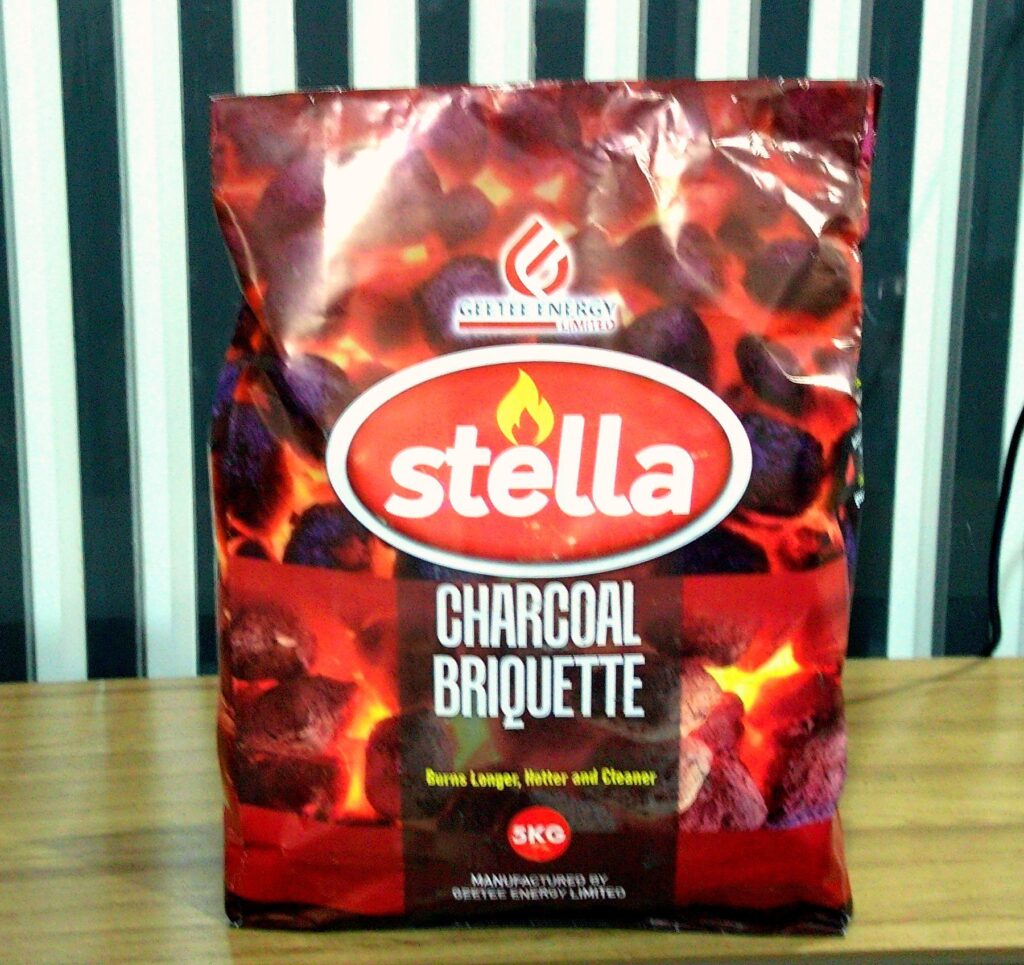
These are the engineered cousins of wood charcoal. Briquettes are made from charcoal dust, sawdust, and binders like starch or clay. Geetee Energy manufactures it’s charcoal briquettes using binders extruded from an extruder at 300 degrees, 100% natural.
Performance: Heat, Burn Time & Efficiency
According to a comparative study published in the Nigerian Journal of Basic and Applied Sciences, wood charcoal has a calorific value of 6815.12 cal/g (calories per gram) while high-quality briquettes (with starch binders) clock in at 6811.18 cal/g . What this means is that both punch (operate at high velocity) in terms of energy.
But here’s where it gets interesting:
| Feature | Wood Charcoal | Charcoal Briquettes
|Heat Output |Higher peak heat |Moderate, steady heat
|Burn Time |Shorter |Longer
|Ignition Time |Faster (0.91 mm/s) |Slightly slower (1.11 mm/s)
|Ash Production |Low |Higher
|Flavor Impact |Strong, smoky |Mild, consistent
[Comparative Studies of Burning Rates and Water Boiling Time of Wood Charcoal and Briquettes] (https://www.ajol.info/index.php/njbas/article/view/174472/163868)
If you’re chasing that authentic extremely smoky flavor, wood charcoal is your best option. Charcoal briquettes, on the other hand, offer a milder smoke basically smokeless ideal for foods that need a more subtle touch.
Environmental Impact
Here’s where briquettes shine.
They’re often made from agricultural waste like coconut shells, corn cobs, or sawdust making them a more sustainable option. Plus, their uniform shape and density mean less waste and more efficient burning.In Nigeria alone, over 50 million metric tons of fuel wood are consumed annually, contributing to (https://www.ajol.info/index.php/njbas/article/view)
Switching to briquettes made from renewable biomass could help reduce this pressure on forests.
Cost & Accessibility
Charcoal briquettes are generally more affordable and easier to store. Their consistent shape makes them ideal for stacking, packaging, and transporting. Wood charcoal, while often pricier, is still widely available in local markets and favored by traditional cooks.
Final Verdict:
Which Should You Choose? Go with wood charcoal if you want intense heat, fast ignition, and bold flavor perfect for searing steaks or grilling in a hurry. But beware of the health dangers of the extreme smoke.Choose briquettes if you need a longer, steadier burn ideal for slow-cooking, smoking, or saving money over time.
The smokeless charcoal
briquettes is your best option.